01
Subject to validation
Virtual Controls
Historically calibrated virtual cohorts that could stand in for part of a physical control group. Whether, and how far, is decided by comparing twin endpoints against measured study results.
Nxtcure Labs is changing the future of medicine through running clinical trials end to end. People make the calls. Galen is our full-stack AI-driven CRO: thirteen purpose-built agents run a study end to end in lifecycle order, and every action with clinical, safety, regulatory or financial consequence stops in one review queue until a qualified human approves it.
Designed to the FDA and EMA January 2026 guiding principles for AI in drug development
Orchestrate · CTX-NSCLC-301
Phase 3 · 450 subjects · 15 sites
Feasibility
DoneEnrollment burden scored; 15 sites ranked
Site activation
DoneContract aging 41 d against the 77 d benchmark
Monitoring
ReviewSite 12 KRI 0.74 · on-site visit proposed for review
Safety
ReviewSerious AE, grade 3 · to safety physician, critical
Biostatistics
RunningDisposition and AE tables, awaiting validation gate
Backed by Y Combinator

Founded at Harvard

Nxtcure Labs partners





One company, two complementary branches
A digital twin is a simulated copy of a patient or an animal: body, tumour and treatment history. Underneath are compartmental models simulating how a drug distributes through the body and the response it drives. The aim is to predict a study's outcome before it starts and to keep predicting while it runs, with a person deciding what to do about every prediction. In the clinic that means a candidate protocol tested on a virtual cohort first. In the vivarium it means a study designed with the twin's forecast in hand.
A twin per subject
Each patient or animal becomes a model built from imaging, records and daily measurements, and it grows with every new data point.
Forecast before, and during
Dose, schedule and combination arms run on the virtual cohort before the study starts, and the forecast is re-run as measurements arrive, so a deviation from the predicted course shows early.
Virtual controls, once validated
Historically calibrated virtual cohorts could stand in for part of a control arm. Whether they can is a validation question, answered by comparing twin endpoints with measured results, not a claim made today.
The human figure is the MakeHuman base mesh (CC0), a generic body and not a patient. The animal and its twin are the same surface, extracted from a CC0 micro-CT scan of mouse M01 on day 10 (Rosenhain et al. 2018), with the scan's annotated tumour lit inside the twin. The arms shown on the stage are illustrative. The twin's drug-response model is in development, and nothing it simulates is a clinically validated prediction; what runs today is the preclinical measurement pipeline below, which is how a twin is kept honest.
A twin is only as good as the data that updates it. Today a technician measures each tumour with calipers once a week. The In Vivo Co-Pilot points our lab-vision pipeline at the cage instead: a box from Jev, a mask from SAM 2, a 3D size from the cameras, and a growth check against the rule, every day. Scrub the ten days of one mouse. Anything the rules or the model are unsure about goes to a person, never into the twin.
Simulated demo on the same CC0 micro-CT mouse: each camera view is a surface render of the real animal at one of its scans, not a photograph; the CT tumour mask is the truth it is scored against. Presence from Jev 1.14; the box is the CT-projected outline standing in for a trained detector; masks from SAM 2.1; 3D from a visual hull. Days without two accepted masks from cameras at least 90° apart get no 3D number. Thresholds are demo values, to be reset on vivarium footage with a design-partner CRO.
In Vivo Co-Pilot · mouse M01, camera 300°
Six scans over ten days, one camera, the bump measured each time
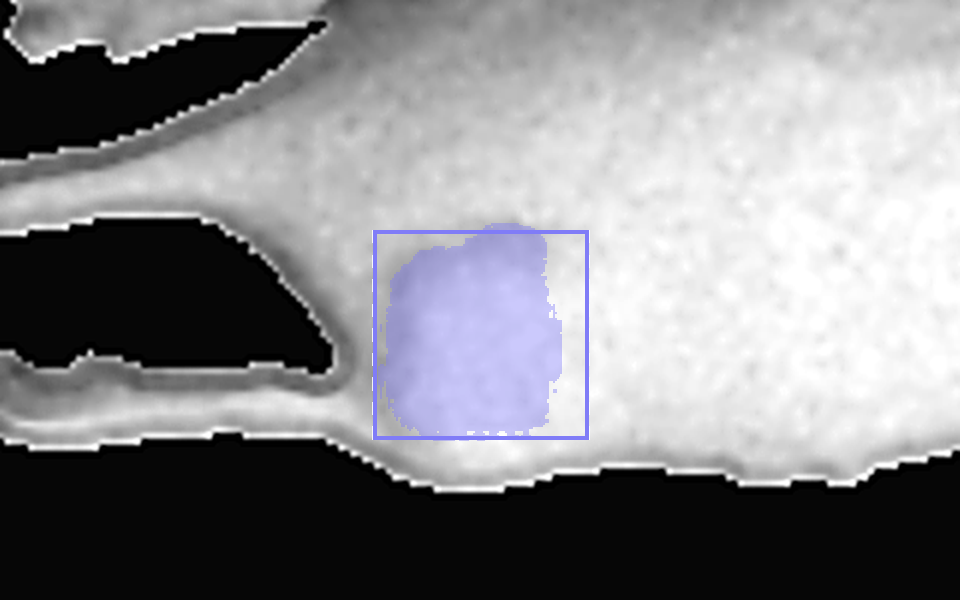
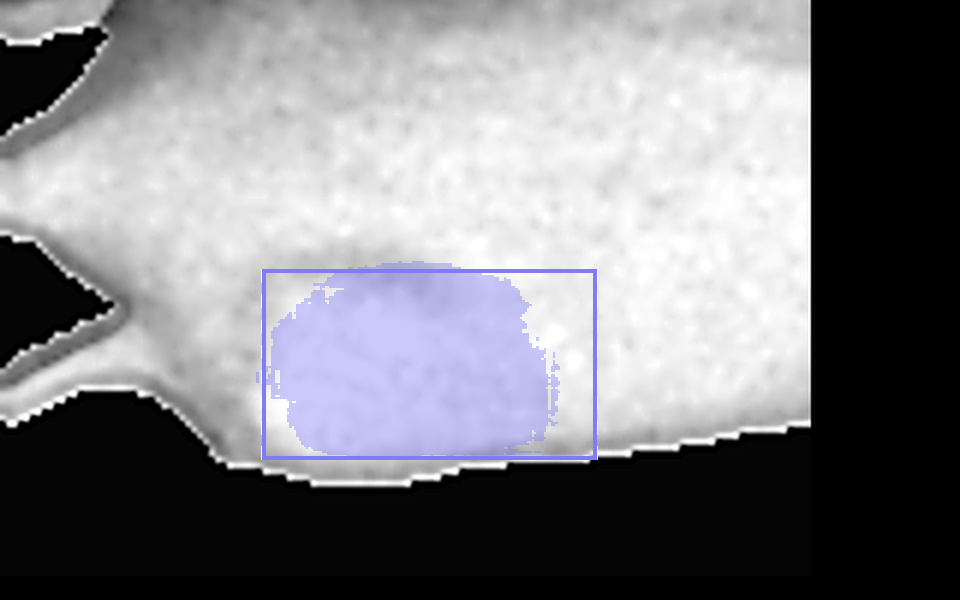
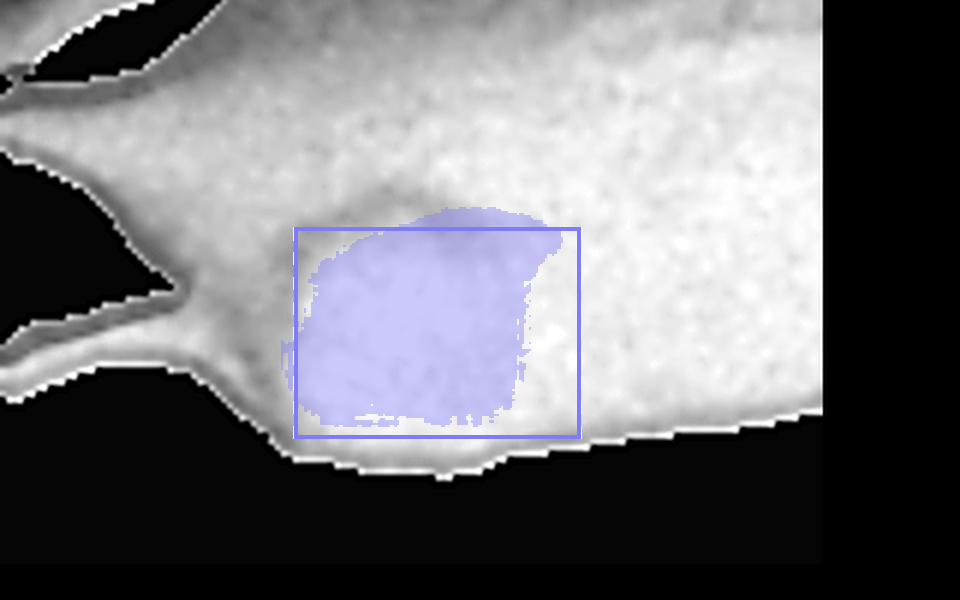
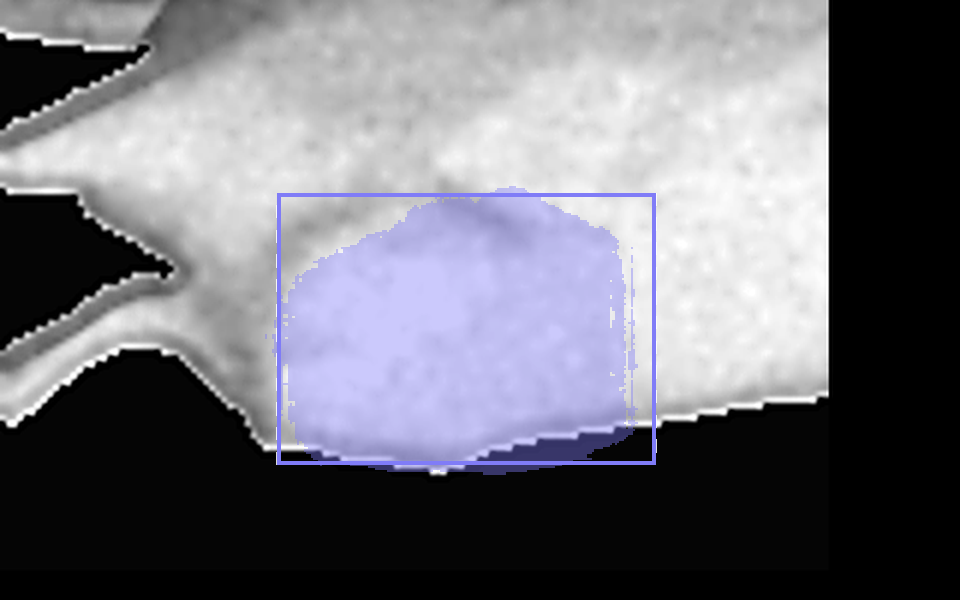
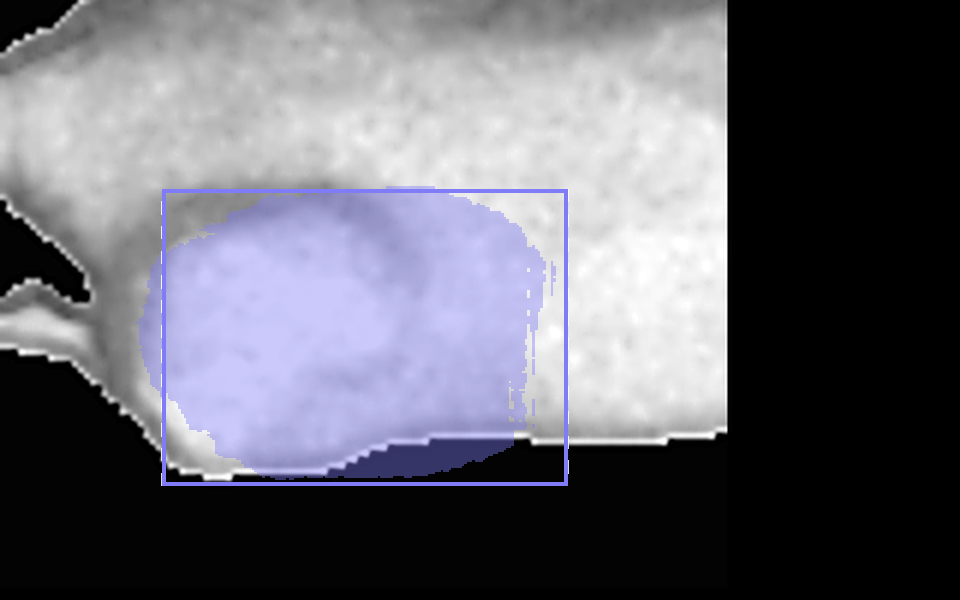
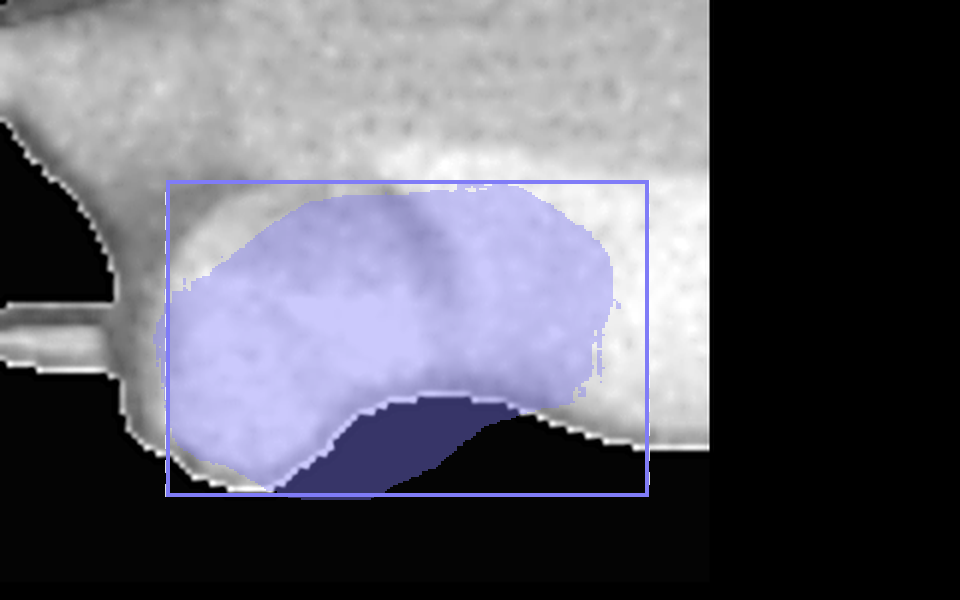 0.25 hRecJev boxSAM 2 maskCT truth
Camera, visible bump against CT truth (dashed), mm³ by day
The same models we run for our own trials are being packaged as modules a CRO, a research laboratory or a sponsor can license and point at their own preclinical programmes. Four modules, each at its own stage, each keeping a person in charge of what the prediction is used for.
Subject to validation
Historically calibrated virtual cohorts that could stand in for part of a physical control group. Whether, and how far, is decided by comparing twin endpoints against measured study results.
In development
Run a study design on the twin before the first dose: dose levels, schedules and arm sizes, with the likely failure points surfaced while the protocol can still change.
Prototype
Daily measurements from the vivarium compared with the twin’s predicted trajectory, so a deviation is raised to a person the day it appears rather than at the next caliper reading.
In development
Coupled differential equations for drug distribution and the biological response it drives, seeded per subject and re-run as data arrives. The model underneath the other three modules.
These modules describe where the product is going, not a service on sale today. Virtual controls in particular wait on a validation programme that compares twin endpoints with measured results before any twin-derived data is offered to a study. Pricing and terms are agreed per programme.
Each agent does its routine work, and when a record disagrees with what the protocol requires it stops and hands the evidence to a named person. Keep scrolling to deal the next hand.
1 to 3 of 13 · Study Start-Up & Design
Study Start-Up & Design
Feasibility
What it does
Scores enrollment burden per site from the eligibility criteria and visit schedule, then ranks candidate sites.
What it flags
Study Start-Up & Design
Protocol
What it does
Drafts protocol sections and scores amendment risk against the SPIRIT checklist. Every draft is a proposal; a regulatory lead signs.
What it flags
Study Start-Up & Design
Activation
What it does
Tracks every site’s contract, budget, IRB and training against the 77-day activation benchmark and names the item on the critical path.
What it flags
Nxtcure Labs CRO Agent Galen revolutionizes medicine by advancing next generation treatments in oncology through concurrently managed clinical trials.
Start-up
Protocol drafting with an amendment-risk score against the SPIRIT checklist, feasibility and site ranking, and activation readiness tracked against the 77-day benchmark.
Operations
Risk-based monitoring with a KRI scorecard per site, drug-supply forecasting with a 15% buffer, dropout prediction and a termination-risk watch.
Data & safety
Query generation and auto-resolution on a 14-day SLA, pharmacovigilance triage that always escalates serious events, and TLFs behind a double-programming validation gate.
Quality
CSR drafting with mandatory sign-off, a self-auditing Trial Master File, PubMed evidence links for every review, and print-ready PDFs.
Book a demo and we will walk the review queue, the reasoning trail and the agent pipeline on a live synthetic Phase 3 study, or talk through licensing the digital twin modules for your own preclinical programme.